
The company Bor-plastika is the only company in Croatia that, in cooperation with INL – International Iberian Nanotechnology Laboratory from Portugal and JSI – Jožef Stefan Institute from Slovenia, improved the current technology for the production of wastewater treatment plants, by incorporating Moving Bed Biofilm Reactor (MBBR) technology into their manufacturing portfolio, to reduce raw material and energy consumption while maintaining or improving the performance of their devices.
The BP MBBR 10 device was designed to treat wastewater for 10 population equivalent (PE). The design is based on BP ASP 10 device with a conventional activated sludge process (suspended biomass) that is already produced by Bor Plastika. This device is to be upgraded into a mini compact wastewater treatment plant with MBBR carriers. The notation of this unit used within this report is BP MBBR 10. The estimated daily amount of input wastewater is 150 l/PE/d with a daily BOD load equal to 60 g BOD/PE/d. The total daily input wastewater load is thus 1,5 m3/d with 0,6 kg BOD/d.
The MBBR device consists of a primary settling tank, aeration tank, and secondary settling tank. There is no return sludge from the secondary settling tank to the aeration tank as is the case in ASP device. For the MBBR primary and secondary settling tanks, the same volumes are expected for BP MBBR 10 as used for the BP ASP 10 device.
Process unit - MBBR
Primary settler
Aeration tank
Secondary settler
Surface (m2)
0.48
0.26
0.54
Water depth (m)
1.26
1.26
1.26
Volume (m3)
0.60
0.303
0.68
To test the performance of the designed MBBR device, simulations were performed in wastewater modelling and simulation software GPS-X.
Fig 1. Simulation scheme for conventional activated sludge process (ASP).
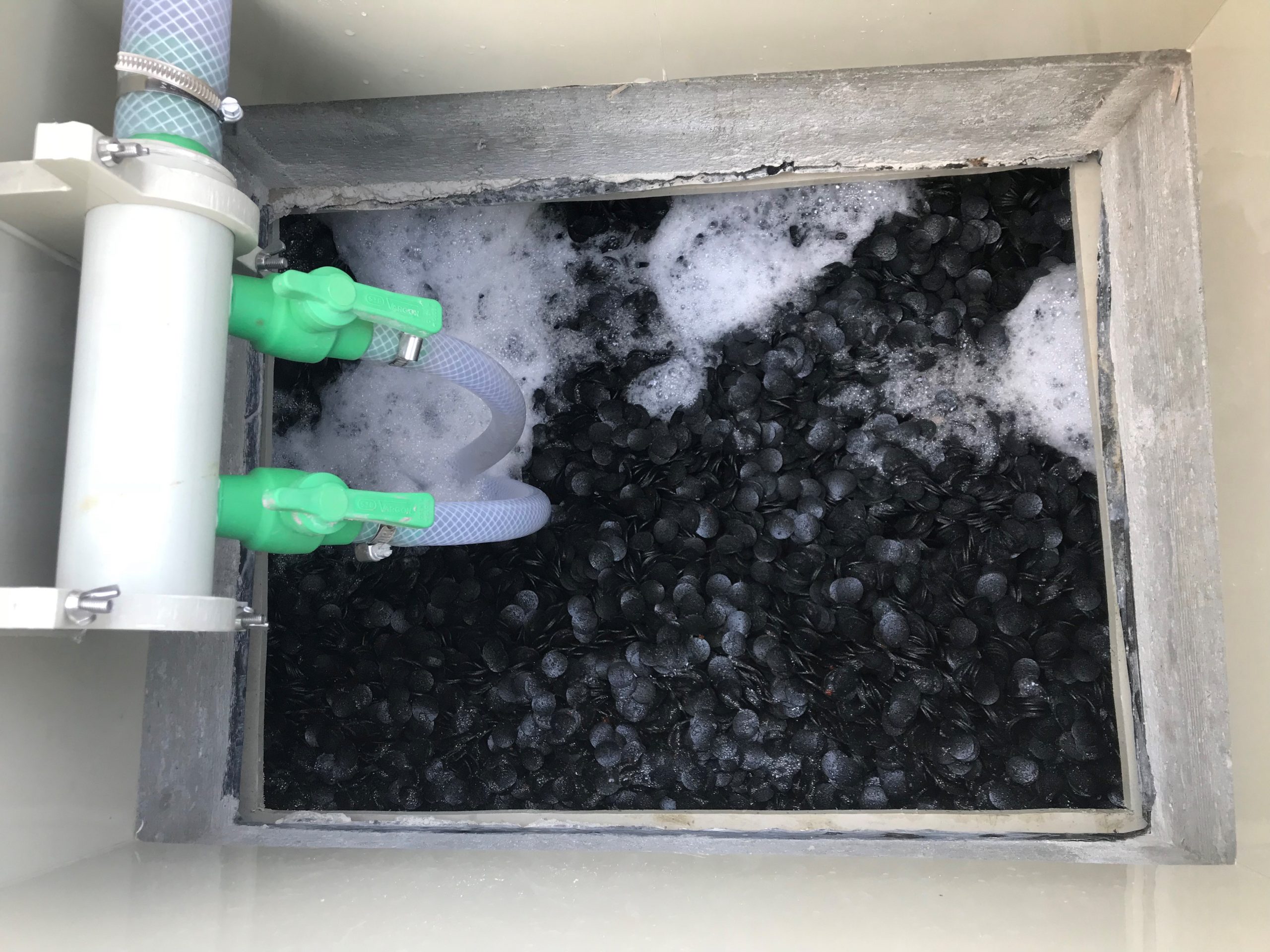
Fig. 2 Simulation scheme for moving bed biofilm reactor (MBBR) process.
Aeration tank volume
Fig. 3 shows the effluent COD, BOD and TSS concentrations at different volumes of MBBR aeration tank and different wastewater temperatures. Also, in this case, the effluent COD and BOD concentrations show an exponential decrease of plant performance if the MBBR aeration tank volume is decreased below 0,4 m3. The highest sensitivity to plant operating volume is obtained at low temperatures. Hence, the MBBR aerobic tank volume of 0,323 m3 is considered as the borderline volume for the design. Also, in this case, the effluent TSS concentrations were unaffected by the aeration tank design volume.
Fig. 3. Effluent COD, BOD and TSS concentrations obtained at different aeration tank volumes. The vertical line indicates the operation at the MBBR design volume
Two-tank configuration
Analysis of plant performance was also performed for different BOD removal configurations, i.e. single stage BOD removal with one aeration tank and two-stage BOD removal with two aeration tanks. In the second case, the total volume was 35 % and 65 % of the total volume for the first and second aeration tank, respectively.
Simulations were performed at a critical temperature of 10 °C. Fig. 4. shows the results of both plant configurations and different total aeration tank volumes.
Results indicated that two-stage configuration outperforms the single-stage configuration, especially at larger total aeration tank volumes, where COD removal is improved for around 10 %, BOD removal for around 50 %, while effluent TSS concentration were not affected.
At the design MBBR aeration tank volume of 0,323 m3, the improvement is smaller; COD was improved for around 7 % and BOD for around 20 %. The obtained effluent concentrations for COD, BOD and TSS at a critical temperature of 10 °C are 70,57 mg COD/L, 16,3 mg O2/L and 15,6 mg/L, respectively.
Fig. 4. Effluent COD, BOD and TSS concentration obtained for 1- or 2-tank configuration and different total aeration tank volumes. The vertical line indicates the operation at the MBBR design volume.







Recent Comments